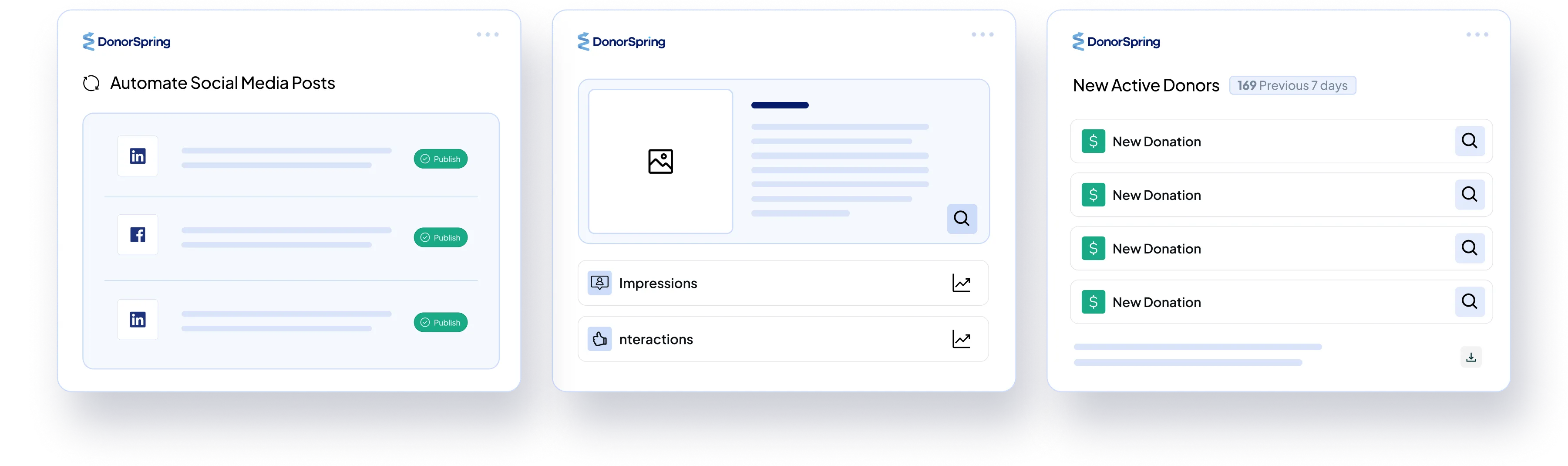
Expand your reach with tailored posts that connect you to the audiences that matter most.

Turn online engagement into real contributions that fuel your mission.
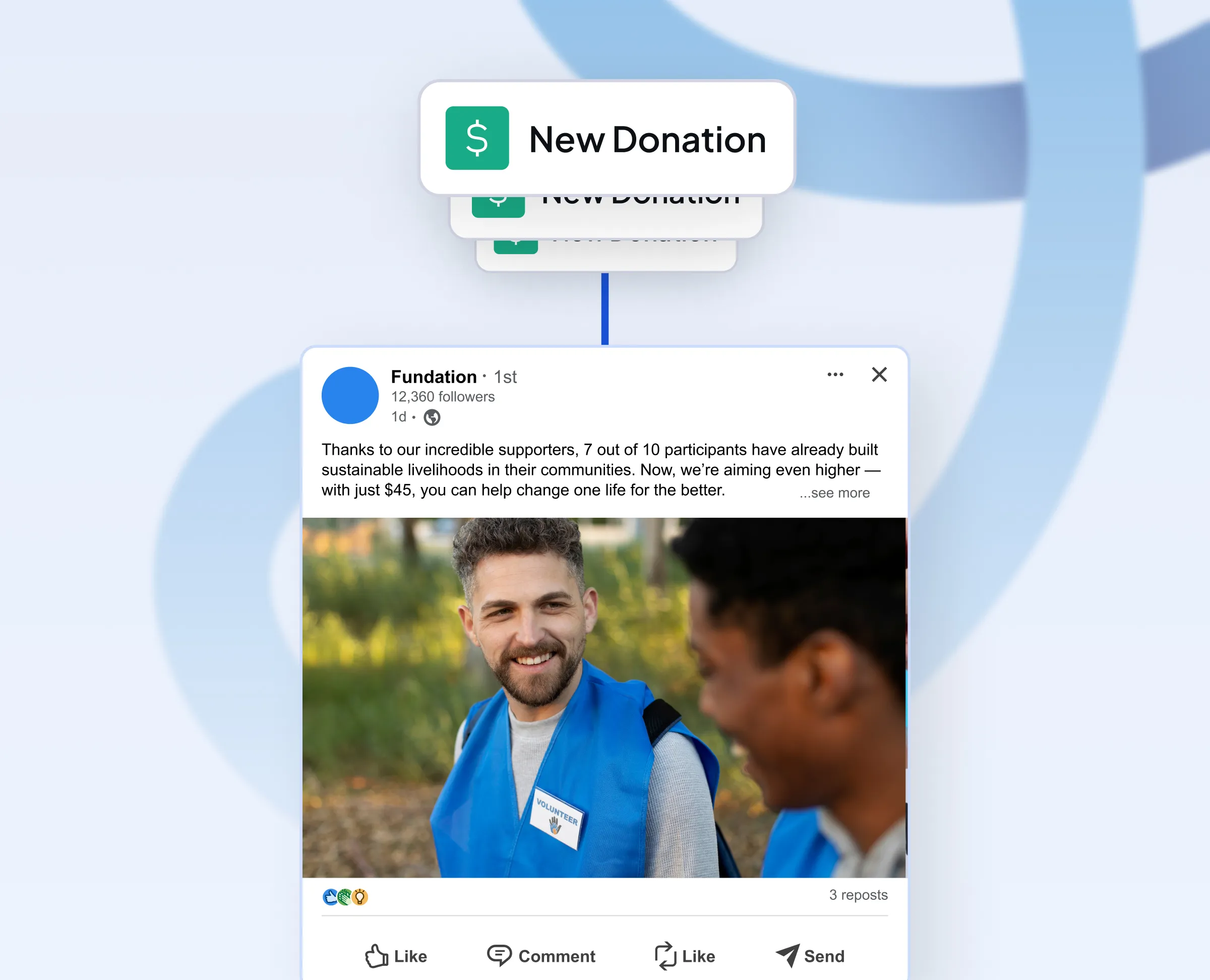
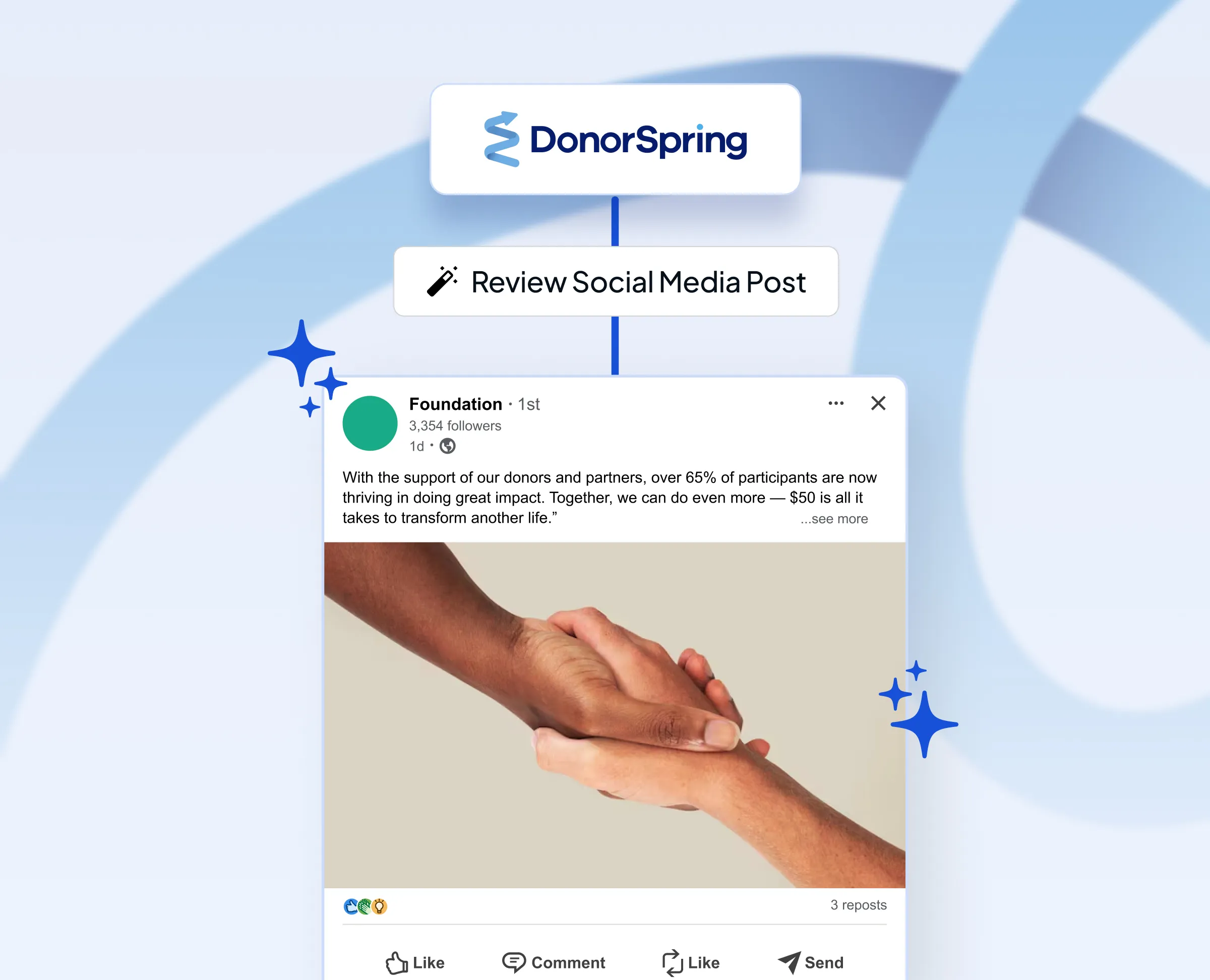
Save time with ready-to-go posts designed to capture attention and inspire giving.

What is social media fundraising for nonprofits?

Social media fundraising is the practice of using social platforms like Facebook, Instagram, Twitter, LinkedIn, and TikTok to raise money and awareness for your nonprofit organization. It involves creating compelling content, engaging with supporters, sharing your mission, and making it easy for followers to donate directly through social platforms or linked donation pages.
Which social media platforms are best for nonprofit fundraising?
Facebook remains one of the most effective platforms for nonprofit fundraising given its large user base. LinkedIn works well for reaching major donors and professional networks. Instagram is excellent for visual storytelling and reaching younger donors. TikTok is emerging as a powerful platform for reaching Gen Z donors through authentic, creative content. The best platform depends on where your target audience spends their time.
How do I start fundraising on social media?
Begin by setting up official nonprofit accounts on your chosen platforms and verifying your organization where possible. Create a content strategy that tells your story authentically, set clear fundraising goals, and make donation links easily accessible. Post consistently and engage with your community. With DonorSpring, you can automate much of this process.
What types of content work best for social media fundraising?
Authentic storytelling that shows your impact performs best. Share beneficiary stories with photos and videos, behind-the-scenes content, volunteer spotlights, and real-time updates from events or programs. User-generated content from supporters adds credibility. Educational posts about your cause build awareness. Always include clear calls-to-action and make it emotionally compelling while remaining genuine and respectful.
How often should nonprofits post on social media?
Quality matters more than quantity, but consistency is key. Aim for at least 3-5 posts per week on primary platforms. Facebook and Instagram typically perform well with 1-2 daily posts. LinkedIn works well with 2-4 posts weekly. Create a content calendar to maintain consistency without overwhelming your audience or burning out your team.
What are the best practices for nonprofit social media fundraising?
Focus on storytelling over selling, show tangible impact with specific examples and data, respond promptly to comments and messages, use high-quality visuals, optimize posts for mobile viewing, include clear calls-to-action, thank donors publicly when appropriate, and create urgency with matching campaigns or deadlines. Always maintain transparency about how funds are used and celebrate milestones with your community.
How can small nonprofits compete on social media without a big budget?
Authenticity trumps production value. Use smartphone videos, encourage volunteer and beneficiary content creation, leverage free design tools like Canva, focus on one or two platforms instead of spreading thin, engage consistently with your community, and collaborate with micro-influencers or local supporters. User-generated content and genuine stories often outperform expensive produced content.
What metrics should nonprofits track for social media fundraising?
Track engagement rate (likes, comments, shares), reach and impressions, click-through rates on donation links, conversion rates from social traffic, donor acquisition cost, average donation amount, fundraiser creation rate for peer-to-peer campaigns, and follower growth. Most importantly, track total funds raised and return on investment. Use platform analytics and Google Analytics to measure what drives actual donations.
How do you create urgency in social media fundraising campaigns?
Use time-sensitive campaigns like Giving Tuesday or year-end giving, create matching gift challenges with deadlines, show real-time progress toward specific goals with thermometers or counters, share immediate needs with concrete examples, use countdown timers in stories, and demonstrate what happens if goals aren't met. Always balance urgency with authenticity to maintain trust.
How do you handle negative comments during fundraising campaigns?
Respond professionally and promptly to legitimate concerns with transparency. Have a crisis communication plan ready. Delete spam and block abusive accounts, but address genuine criticism with facts and empathy. Sometimes negative comments provide opportunities to educate the public about your work. Never get defensive, and consider taking sensitive conversations to private messages when appropriate.
What role do influencers play in nonprofit social media fundraising?
Influencers can dramatically expand your reach to new audiences. Micro-influencers with highly engaged niche audiences often provide better ROI than celebrities. Look for influencers who genuinely align with your mission. Provide them with campaign toolkits and specific asks. Many influencers will partner with nonprofits for free or reduced rates, especially if the cause resonates personally with them.
How can nonprofits use video for social media fundraising?
Video generates higher engagement than static content. Create short-form vertical videos for Instagram Reels, TikTok, and YouTube Shorts showing impact stories, volunteer experiences, and day-in-the-life content. Go live on Facebook or Instagram to tour facilities, interview beneficiaries, or host Q&A sessions. Keep videos short, captions on, and mobile-optimized. Authentic, unpolished videos often perform better than overly produced content.
What are common mistakes nonprofits make in social media fundraising?
Common mistakes include only posting when asking for money, neglecting to respond to comments, using too much nonprofit jargon, posting inconsistently, failing to show impact, ignoring platform-specific features, not optimizing for mobile, forgetting clear calls-to-action, and underutilizing storytelling. Avoid being too formal—social media rewards authentic, conversational communication.
How do you build a social media community for fundraising?
Engage consistently beyond just fundraising asks. Share educational content, celebrate supporter stories, create opportunities for community interaction, respond to every comment possible, host challenges or events, create branded hashtags, feature volunteers and donors, share behind-the-scenes content, and make your community feel like valued partners in your mission rather than just donors.
What is the ideal ratio of fundraising posts to other content?
Follow the 80/20 rule: 80% of content should educate, inspire, entertain, or engage your audience, while only 20% should directly ask for donations. This builds trust and keeps followers engaged without feeling constantly solicited. Even non-fundraising content should tell your mission story and can include subtle calls-to-action in profiles or comments.
How can nonprofits leverage hashtags for fundraising?
Use a mix of branded campaign hashtags, popular nonprofit hashtags like #GivingTuesday or #NonprofitTuesday, cause-specific hashtags, and location-based hashtags. Research trending hashtags in your sector. Keep it to 5-10 relevant hashtags on Instagram and 1-3 on other platforms. Create a unique campaign hashtag to track participation and encourage user-generated content from supporters.