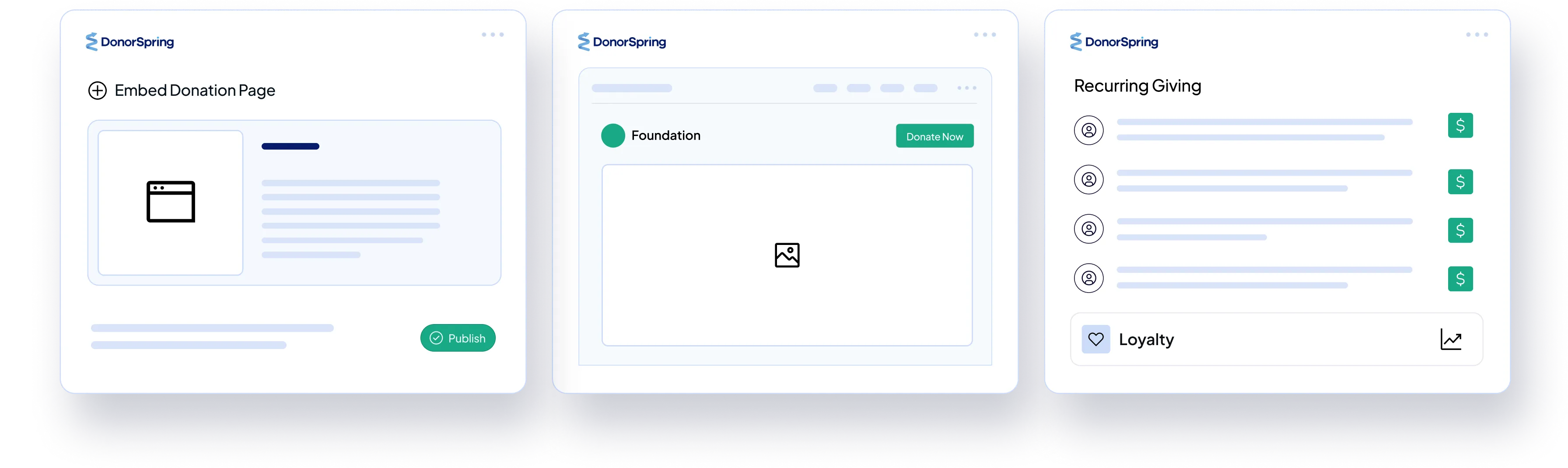
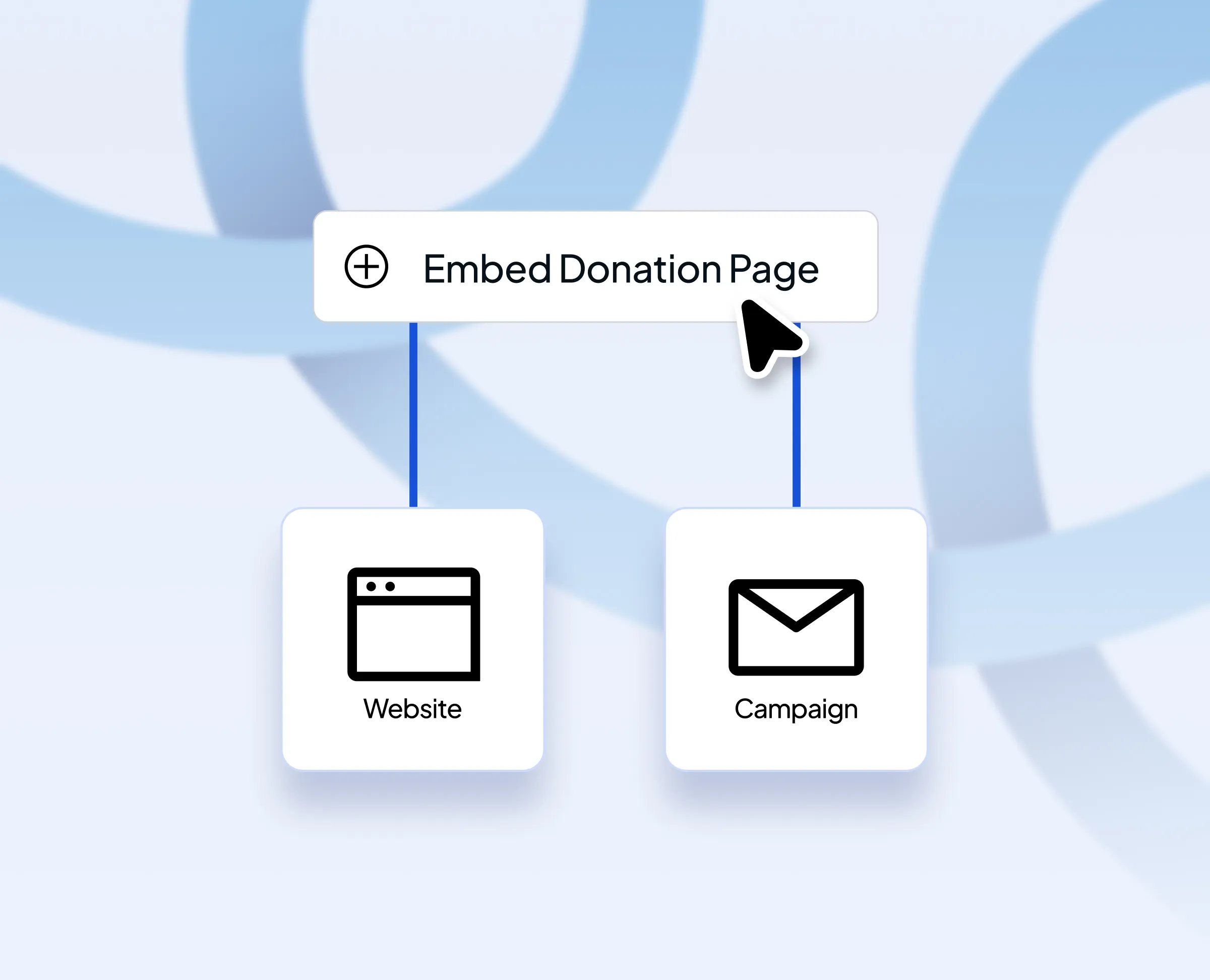
Make giving seamless by placing donation forms directly on your website or campaign pages.
Design fully branded donation pages that reflect your nonprofit’s identity and inspire trust.

Boost donations with smart features designed to increase completion and average gift size.
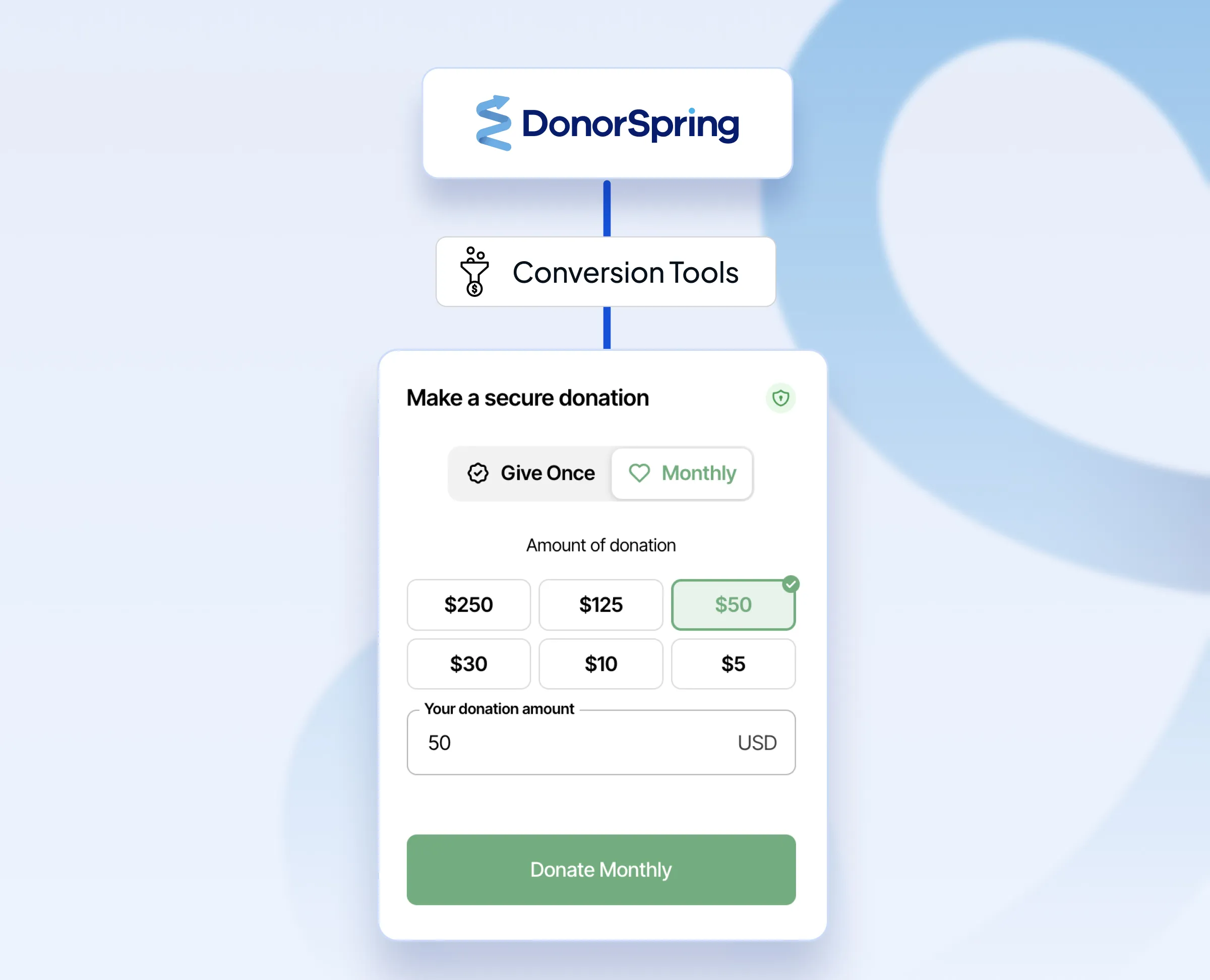
Encourage long-term support with easy recurring donation options that deepen donor relationships.

Automatically send personalized thank-you emails and tax receipts, saving your team time while keeping donors appreciated and compliant.


What is donation processing?

Donation processing is the system and technology that enables nonprofits to securely accept, record, and manage financial contributions from donors. This includes processing various payment methods like credit cards, debit cards, ACH transfers, and digital wallets, generating receipts, maintaining donor records, and ensuring compliance with financial regulations. Modern donation processing platforms like DonorSpring streamline these operations to make giving easy for donors and efficient for organizations.
What is recurring giving?
Recurring giving, also called sustainer giving or monthly giving, is when donors set up automatic donations that repeat at regular intervals—typically monthly, quarterly, or annually. This creates a predictable revenue stream for nonprofits and builds long-term relationships with committed supporters. Recurring donors often give more over their lifetime than one-time donors and have higher retention rates.
Why is recurring giving important for nonprofits?
Recurring giving provides predictable, sustainable revenue that helps nonprofits budget more effectively and plan long-term programs. Monthly donors typically contribute 42% more annually than one-time donors and have retention rates of 80% or higher compared to 40-45% for one-time donors. This steady income reduces fundraising costs and allows organizations to focus more resources on their mission rather than constantly seeking new donors.
What payment methods should nonprofits accept?
Nonprofits should accept major credit cards (Visa, Mastercard, American Express, Discover), debit cards, ACH bank transfers, and increasingly, digital wallets like Apple Pay and Google Pay. Offering multiple payment options reduces barriers to giving and accommodates donor preferences. Platforms like DonorSpring support various payment methods to maximize donor convenience and increase conversion rates.
How much do donation processing fees typically cost?
Standard credit card processing fees for nonprofits typically range from 2.2% to 3% plus a per-transaction fee of around $0.30. ACH transfers usually cost less, averaging 0.5% to 1% per transaction. DonorSpring provides transparent pricing specifically designed for nonprofit budgets, helping organizations maximize the impact of every dollar donated.
What is the difference between a payment gateway and a payment processor?
A payment gateway is the technology that securely transmits payment information between the donor, your website, and the payment processor. A payment processor is the service that actually handles the transaction, communicating with banks and card networks to transfer funds. Many modern donation platforms integrate both functions seamlessly, so nonprofits don't need to manage multiple vendors.
How do I set up recurring donations for my nonprofit?
Choose a donation platform that supports recurring giving functionality, like DonorSpring. Set up your donation forms with clear options for donors to select recurring gifts. Make the monthly giving option prominent and explain the impact of sustained support. Create a simple signup process with minimal fields, allow donors to choose their gift frequency and amount, and ensure they receive confirmation and can manage their recurring gifts easily.
What are best practices for donation forms?
Keep forms short with only essential fields to reduce friction. Make the form mobile-responsive since many donors give on smartphones. Use clear calls-to-action and compelling impact statements. Offer suggested donation amounts with one highlighted. Include a recurring giving option prominently. Ensure the form loads quickly and is secure with SSL certification. Display trust signals like security badges and show impact examples for different donation levels.
How can I increase recurring donor retention?
Send personalized thank-you messages immediately and regularly. Provide dedicated communication tailored to monthly donors that makes them feel valued. Show specific impact of their sustained support with stories and updates. Make it easy for donors to update payment information before cards expire. Create a branded monthly giving program with a special name. Send anniversary messages celebrating their giving milestones. Never make donors feel taken for granted.
What information should donation receipts include?
Tax-compliant receipts must include your organization's legal name, EIN (tax ID number), donation amount, donation date, and your nonprofit's tax-exempt status. For recurring gifts, provide receipts for each transaction or consolidated annual receipts. Automated receipt generation through platforms like DonorSpring ensures compliance and timely acknowledgment.
Can donors cover processing fees?
Yes, many donation platforms offer the option for donors to cover transaction fees by adding a small percentage to their donation. This practice, sometimes called "round up" or "cover the costs," has become increasingly common and accepted. However, it should always be optional and clearly explained. DonorSpring has this option built directly into donation forms, helping nonprofits maximize the impact of contributions.
What is ACH processing and should nonprofits use it?
ACH (Automated Clearing House) is a bank-to-bank electronic payment system that's particularly well-suited for recurring donations. ACH transactions have significantly lower processing fees than credit cards (often under 1%) and lower failure rates since they're not subject to credit card expirations. The downside is that ACH transactions take 3-5 business days to process compared to instant credit card authorization, but for monthly giving programs, this delay is negligible.
How do I create a monthly giving program?
Start by naming your program something memorable that reflects your mission. Set up dedicated landing pages and marketing materials specifically for monthly donors. Create a compelling case for why recurring support matters. Offer benefits like exclusive updates, special recognition, or branded items. Use storytelling to show the cumulative impact of monthly gifts. Make enrollment simple through optimized forms on platforms like DonorSpring. Promote the program across all fundraising channels.
What are common reasons donors cancel recurring gifts?
The most common reasons include forgotten commitments on auto-renew, financial circumstances changing, expired or lost credit cards not being updated, feeling underappreciated or over-solicited, lack of communication about impact, moving and forgetting to update information, or dissatisfaction with the organization's direction. Many cancellations can be prevented through consistent engagement, impact reporting, and proactive communication.
How do I upgrade recurring donors to higher gift amounts?
Build relationships first before asking for increases. Show specific impact of their current giving level and what increased support could accomplish. Time upgrade requests strategically, such as during year-end or after major impact milestones. Make the process easy with a single-click upgrade option in donor portals. Consider anniversary messages that celebrate their giving journey and naturally present an opportunity to increase impact. Never make donors feel their current gift is inadequate.
How can I make my donation process more mobile-friendly?
Use responsive donation forms that adapt to any screen size. Minimize the number of required fields and use autofill-friendly field names. Implement large, touch-friendly buttons and form elements. Enable digital wallet options like Apple Pay and Google Pay for one-tap checkout. Test your forms on various devices and browsers. Ensure fast page load times on mobile networks. DonorSpring's mobile-optimized donation forms are designed to maximize conversion rates on smartphones and tablets.
How do I communicate with recurring donors differently?
Treat recurring donors as partners in your mission with dedicated communication streams. Send monthly impact updates showing how their sustained support makes a difference. Create exclusive content that makes them feel like insiders. Acknowledge their giving anniversaries and milestones. Provide special recognition opportunities. Send year-end summaries showing their total impact. Avoid treating them like regular appeal list members—they've already committed, so focus on stewardship rather than constant asks.