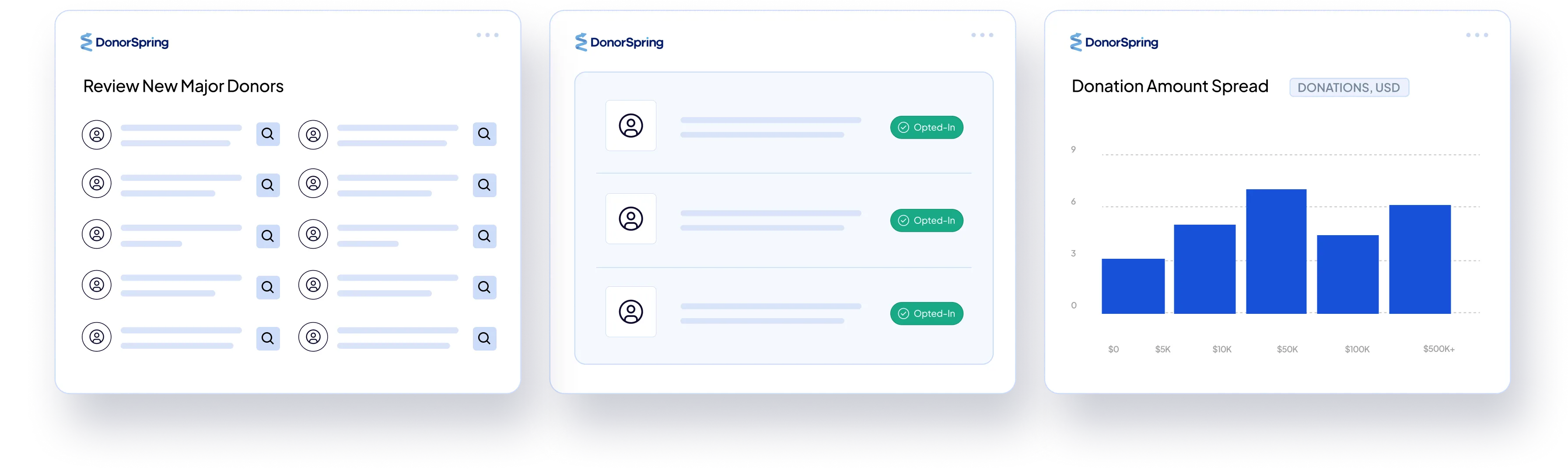
Expand your reach with tools that help you find and connect with supporters across all giving tiers.
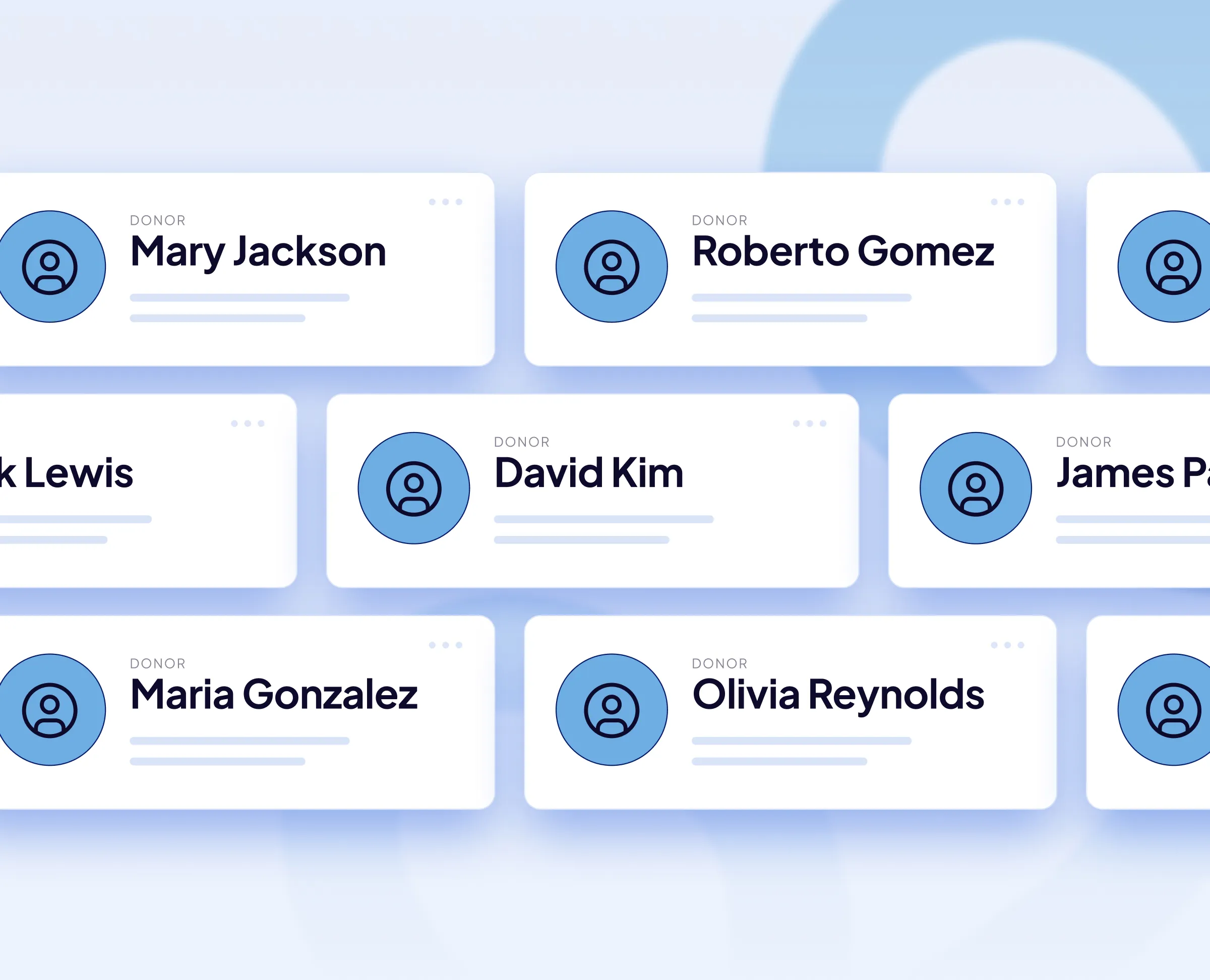
Gain insights into donor wealth, interests, and history so you can focus on the right opportunities.
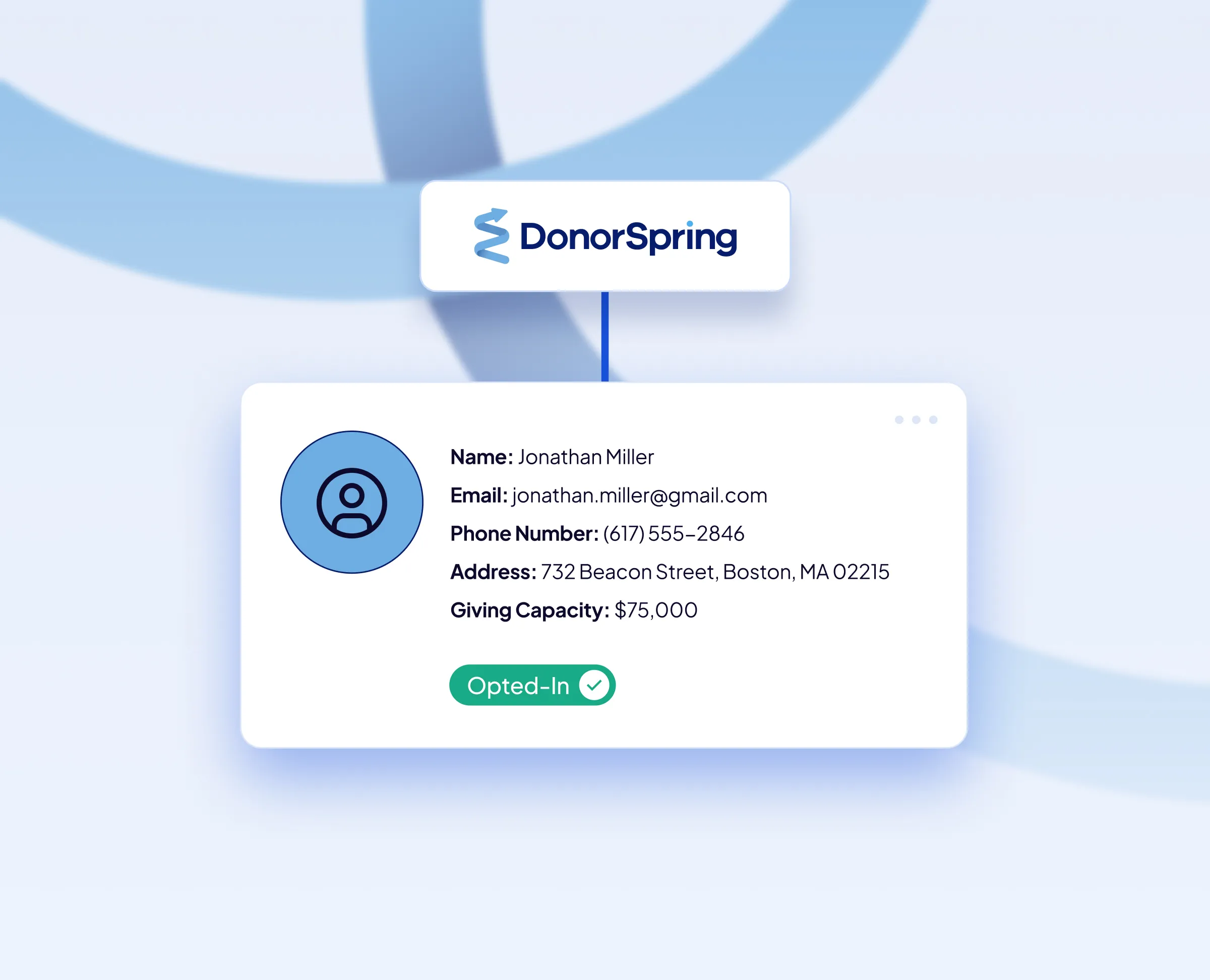
Build meaningful relationships with high-value supporters and inspire transformational gifts.

What is major donor fundraising?

Major donor fundraising is a strategic approach to building relationships with individuals capable of making significant financial contributions to your organization. These donors typically give gifts that are substantially larger than your average donation—often starting at $1,000, $5,000, or $10,000 depending on your organization's size and budget. Major donor programs focus on personalized cultivation, stewardship, and long-term relationship building rather than mass appeal campaigns.
How do I identify major donor prospects?
Start by analyzing your existing donor database to identify individuals who have given consistently, increased their giving over time, or made larger one-time gifts. Look for donors who engage with your organization through volunteering, event attendance, or social media interaction. Platforms like DonorSpring can help you track donor engagement and giving patterns to identify prospects with major gift potential.
What's the difference between a major donor and a regular donor?
The primary difference lies in gift size and the level of personalized engagement required. Major donors make significantly larger contributions and typically expect—and deserve—more direct communication with leadership, detailed impact reports, and opportunities to shape how their gifts are used. While regular donors might receive email newsletters and annual appeals, major donors often require face-to-face meetings, customized proposals, and individualized stewardship plans.
How much should I ask a major donor for?
The ask amount should be based on thorough research into the donor's capacity, previous giving history, and connection to your cause. A common approach is to ask for 2-3 times their largest previous gift, or base your request on specific project costs that align with their interests. Always prepare multiple gift level options and be ready to discuss various funding opportunities. Your donor management system should help you track giving history to inform these decisions. DonorSpring provides recommended ask levels for all newly introduced donors.
What are the stages of major donor cultivation?
Major donor cultivation typically follows these stages: identification (finding prospects), qualification (confirming interest and capacity), cultivation (building the relationship through meetings and engagement), solicitation (making the ask), stewardship (thanking and reporting impact), and renewal (securing ongoing support). This cycle can take 12-18 months or longer.
How often should I communicate with major donors?
Major donors should receive more frequent, personalized communication than your general donor base—typically 8-12 meaningful touchpoints per year. This includes personal phone calls, handwritten notes, face-to-face meetings, exclusive event invitations, and customized impact reports. The key is quality over quantity: each interaction should be intentional and add value to the relationship.
Should major donor solicitations be done in person?
Yes, whenever possible. Research shows that in-person asks have significantly higher success rates than phone, email, or mail solicitations. Face-to-face meetings allow you to read body language, answer questions in real-time, build rapport, and demonstrate the importance of the gift. However, video calls have become increasingly acceptable and can be effective when geographic distance is a factor.
What stewardship activities are most important for major donors?
Effective stewardship includes prompt, personalized thank-you communications (within 48 hours), detailed impact reports showing how their gift made a difference, exclusive access to leadership and program staff, invitations to special events or site visits, and recognition appropriate to their preferences. Many donors appreciate behind-the-scenes involvement or advisory roles. Document all stewardship activities in your donor database to ensure consistency and accountability.
How do I build a major donor program from scratch?
Start by segmenting your current donor base to identify prospects, then develop a moves management system to track cultivation activities. Create a case for support and various funding opportunities at different levels. Train your executive director and board members in relationship-based fundraising. Set realistic goals for the number of prospects you can manage effectively—typically 75-150 active prospects per full-time major gifts officer. Implement a donor acquisition platform like DonorSpring to find prospects, organize prospect information, track interactions, and manage your pipeline systematically.
What role should board members play in major donor fundraising?
Board members are invaluable in major donor fundraising. They can identify prospects from their personal and professional networks, make introductory connections, participate in cultivation activities, attend solicitation meetings to demonstrate peer support, and make their own leadership gifts. Every board member should be engaged in fundraising in some capacity, whether through direct asks, hosting events, or providing strategic guidance on major gift prospects.
How do I handle major donor rejection?
Rejection is a normal part of major gift fundraising. When a prospect declines, thank them graciously for considering the request, ask if they'd like to remain engaged in other ways, and try to understand their reasoning without being pushy. Sometimes "not now" becomes "yes" in the future. Document the conversation, note any concerns or timing issues, and determine an appropriate time to re-engage. Many successful major gifts come after initial "no" responses.